Article

Article
Wood reaches 500 Iraqi local nationals hiring milestone in Basra


It’s been a few weeks since ADIPEC, but one line from Dr Sultan Al Jaber still cuts through the post-event commentary: “Track the signal, tune out the noise.” It’s a simple idea, but in a sector that rarely lacks noise, it’s becoming a vital discipline.
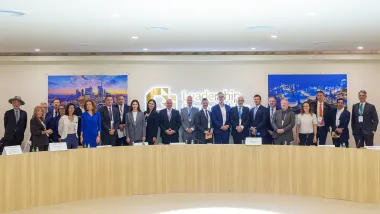
That same focus was evident again last week when I joined the ADNOC Gas panel session. The discussion didn’t revolve around headlines or hype; it centred on delivery, capacity coming online, digitalisation accelerating and decisions grounded in long-term need rather than short-term pressure.
The energy sector is full of competing narratives: market volatility, geopolitical tensions and competing priorities that pull attention in different directions. Add to that the constant hype around “innovative” technologies, and it becomes easy to lose sight of the real progress being made.
Beneath this hype, however, is the steady drumbeat of actionable progress being made towards meeting our energy goals. Electrification is accelerating, with electricity’s share of the global energy mix set to rise from around 20% today to as much as 50% within two decades. Digitalisation and AI have moved from being value-adds to becoming the backbone of operational excellence. Integrated energy systems, conventional and renewable solutions coexisting, are gradually being recognised as the most effective way of ensuring energy security whilst making progress towards international energy goals.
These are not passing trends; they are the defining shifts shaping the future of our industry.

What stood out most to me during both these events was not just the technology on display, but the collaboration in motion. The energy challenge ahead of us is too big for any single company, government or sector to solve alone. Real progress depends on partnership, sharing knowledge, aligning priorities and building the trust needed to turn ambition into delivery.
Wood’s decades-long partnership with ADNOC Gas is a clear demonstration of that collaboration in practice. Our work on major developments such as the Habshan complex expansion shows what it means to anchor vision in real, scalable delivery, proving that progress happens not through rhetoric, but through projects that meaningfully strengthen the energy system.
And this matters, because while we often speak of the energy transition, we should be thinking instead about energy addition. The world’s demand for power is still growing. Meeting that demand responsibly means adding cleaner, more efficient sources of energy alongside existing systems, strengthening rather than replacing the foundation of global energy security.
This isn’t a binary shift; it’s an evolution. Collaboration is what will make it possible.

The path forward is not about chasing the loudest idea or the newest headline. It’s about making pragmatic, informed decisions and working together to deliver solutions that endure.
In a world full of noise, clarity is leadership. As Dr Sultan reminded us, our success depends on our ability to track this signal and tune out the rest.